
Composite Veneers vs Porcelain Veneers

If you’re looking to improve the shape of your teeth, then you have a couple of options to choose from. Some of the most popular treatments for this are composite veneers and porcelain veneers. Keep on reading to find out which one is best for you.
What are composite veneers?
Composite veneers are a minimally-invasive type of tooth covering made using composite resin. The composite sits on top of your existing teeth, helping to shape the teeth into a more desirable appearance. Composite veneers are ideal for fixing small chips or cracks in the teeth, as you do not need to cover the entire tooth with resin.
To get your teeth ready for composite application, only light preparation is needed. Your dentist will then apply an adhesive glue to help the resin stick to your teeth. Once the resin is applied, it will be sculpted into the desired shape, and polished to a high shine finish.
What are porcelain veneers?
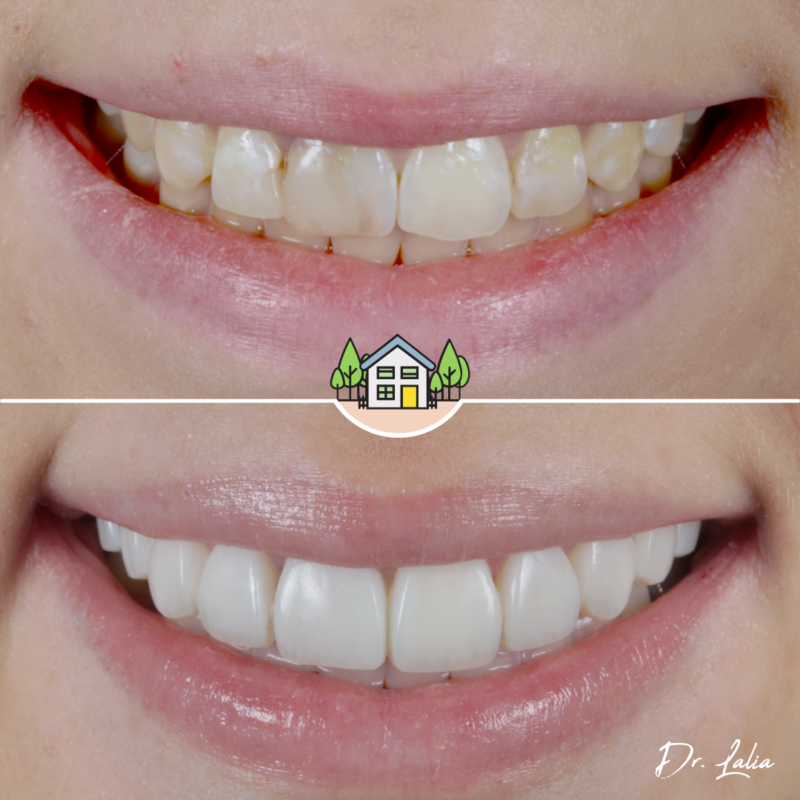
Porcelain veneers are essentially tooth-shaped ‘covers’ that go over the entire front surface of the teeth. They are usually made from thin porcelain (as the name suggests), but nowadays they can also be made of a composite material.
For preparation, your dentist will need to file down your existing teeth in order to fit the veneer cover over the front surface. The dentist will then make impressions of your teeth and send them off to a lab to make the veneers. In the meantime, you will be given temporary veneers to wear. Once your veneers are ready, they will be applied with an adhesive glue, in much the same way as composites.
How long to they last?
Composite veneers can last anywhere from 5 to 7 years. However, this is dependent on your own habits as well as how much composite was used on your teeth. Porcelain veneers generally last between 10 and 15 years with proper care.
How do you maintain them?
Both composite bonding and porcelain veneers have similar maintenance involved. Firstly, you should always practice proper oral health by brushing twice daily with a dentist-approved toothpaste, flossing, and using mouthwash. You should also make sure to see your dentist for regular checkups and cleanings.
Secondly, try not to chew on anything hard, such as ice or boiled sweets. This can actually damage the veneers and cause them to crack in the very same way that it can damage your real teeth. Try to avoid using your teeth as tools for this reason, too.
Veneers can stain just like your natural teeth can, so you may want to limit or avoid dark-coloured food and drink wherever possible to keep them looking sparkling clean. We also advise against smoking.
Finally, address any ongoing issues that you may have that could damage the veneers, such as bruxism (teeth grinding). Bruxism can wear away the veneers over time and also wear away the enamel on your natural teeth. The NHS have a useful guide for you to use on how to stop teeth grinding.
How much does it cost?
We provide composite veneers from £175 per tooth. It is also recommended that you get teeth whitening treatment beforehand, which starts at £325 at our Practice. Porcelain veneers can run anywhere from £495 to £1,000 per tooth depending on where you go to have the treatment (ours start at £495).

Can you remove them?
With composite veneers, the process is minimally-invasive and the composite can be removed in the future, returning the tooth to its original shape. This makes it an ideal solution for those who would like to improve the appearance of their teeth without having to alter the permanent shape or size of them.
Porcelain veneers cannot be removed, as the teeth have been filed down and permanently reshaped. The only time in which porcelain veneers should be removed is when they are being replaced with new veneers.
Are there any risks?
There are a few risks involved with both treatment options. As for composite veneers, they are slightly more likely to chip than porcelain veneers, and so you have to be more careful when applying pressure to them. The resin may also separate from your natural tooth, which can happen when too little adhesive has been applied. However, this should not happen when you complete your treatment with an experienced and reliable cosmetic dentist.
Porcelain veneers can also fall off or crack for the same reasons. However, an added risk comes from the process of shaving down the enamel of the teeth – increased sensitivity. You can experience increased teeth sensitivity after the treatment, and although this should dissipate after some time, residual sensitivity may linger.

Final thoughts: Composite veneers vs porcelain veneers
So, which one is best for you? Here’s a quick overview.
Composite veneers are a minimally-invasive, quick and easy way to get the smile you have always dreamed of. They are cost-effective and the process is reversible, so it may be a good option if you are younger and unsure about committing to porcelain veneers. They are also great for repairing chips or cracks in the teeth.
However, we would advise against getting composite veneers if you are a heavy smoker, as this can prematurely stain the composite and result in a patchy appearance on the teeth. It may also be ill-advised to get composites if you have a habit of nail biting. The habit can be quite hard to break and will increase the risk of your veneers chipping or cracking.
Porcelain veneers are great for those that would like a more permanent solution, as they last longer and are generally more durable and stain-resistant. Porcelain can also look more natural than composite. As porcelain is usually easier on the gumline, we would recommend older patients to opt for this treatment.
On the other hand, porcelain veneers are not a good option for you if you aren’t sure you want to fully commit to them. As we mentioned, they cannot be removed and so they are more of a life-long investment. The initial investment is also a downside of the treatment, as having several teeth done could set you back thousands of pounds.
To discuss your cosmetic dentistry options, contact our Treatment Coordinators at [email protected] or give us a call on 0151 228 3643.